Grinding
Rollers, bracket and hydraulic components for roller presses used ahead of ball mills or in finish-grinding circuits.
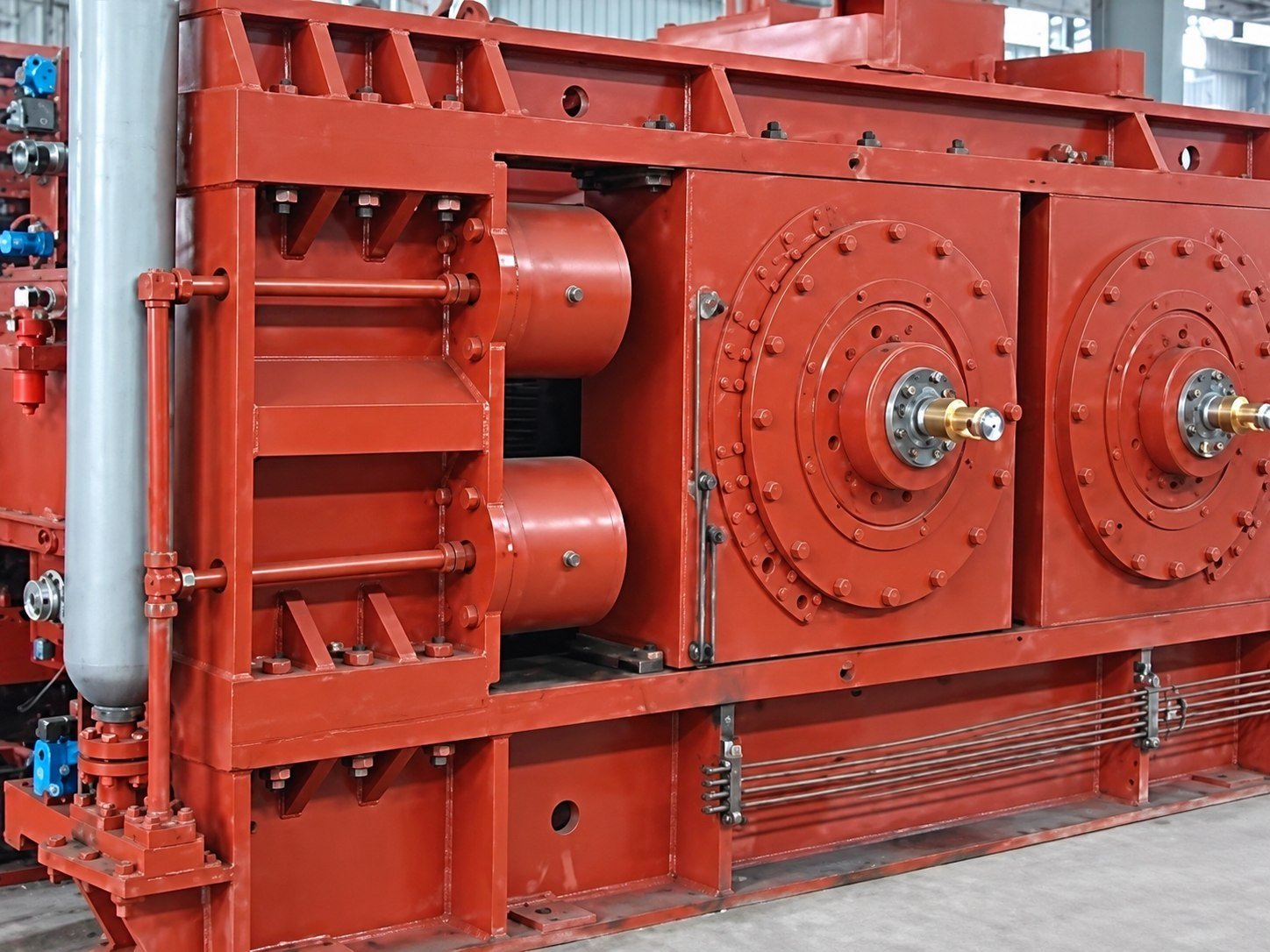
Roller press surfaces and side guide plates take direct compressive wear from the material bed, and the hydraulic system holding roller gap under load has to be kept in good condition to protect throughput and power efficiency.
We supply roller sets, bracket components and hydraulic parts matched to your press frame, and can coordinate a full roller change during a planned shutdown. Roller surface condition (studded, welded overlay, or smooth) should match your original configuration, since it affects both briquette formation and wear life — tell us which type you're currently running.
A closer look at the parts we supply in this category — what each one does, and why it wears or matters the way it does.
The primary wear component; surface pattern (studded, hard-faced or smooth) is matched to your current configuration to keep briquette formation consistent.
Transmit drive power into the roller press drive train.
Structural component of the roller frame that reacts against grinding pressure.
Absorb shock loading within the bracket assembly.
Structural linking parts within the press frame assembly.
Locating and pivot hardware within the bracket and roller mounting assembly.
Maintain correct axial position of rotating components.
Contain the material bed at the roller edges, preventing material spillage and edge wear.
Apply grinding force to the moveable roller; condition affects both throughput and even wear across the roller face.
Seals, valves and fittings for the press's hydraulic loading circuit.
Materials
Wear-resistant surfacing over a forged steel core, matched to your existing roller's surface type for consistent briquette formation.
Used for roller shafts and bracket structural components under heavy compressive cyclic load.
Cylinders and seals rated for the sustained high pressure a roller press hydraulic system runs under.
How Ordering Works
The same process whether you're ordering one wear plate or a full rebuild kit for roller press parts.
A drawing, part number, nameplate photo, or the worn original part — any of these is usually enough to start.
Our team cross-references dimensions, tolerances and material against your equipment before quoting — not from a model number alone.
You get a clear price and delivery schedule, with material and specification confirmed in writing.
Parts are produced by our manufacturing partners and inspected against the confirmed specification before packing.
Packed for the journey — wooden case, steel-frame reinforcement or moisture protection as the part requires — with shipping documentation handled for you.
No Drawing? No Problem
Not every part order starts with a clean technical drawing. If your original part is discontinued, the drawing has been lost over the years, or you only know the equipment model, our engineers can still confirm a compatible replacement.
Send the worn original part, a few clear photos with a tape measure in shot, or just the equipment model and application — we'll take it from there and confirm dimensions before production starts.
In The Field
Common Questions
Sourcing roller press parts for a plant outside this list, or need a drawing checked before you order? Send it across and we'll confirm fit and lead time.
Contact Us